

There is little that troubles a devoted dog owner more than seeing their companion in a state of discomfort. The endless scratching, the restless nights, the perplexing lists of ingredients on food packaging that promise relief but often deliver more confusion. It is a journey many of us know well, a search for a gentle, effective solution that feels more like wholesome nourishment than a sterile prescription. This is where a considered approach to hypoallergenic dog food can truly make a difference, offering a path back to comfort and vitality that honours the natural way of things.
In this thoughtful guide, we will walk you through the world of hypoallergenic nutrition. We’ll help you decipher complex labels with confidence, understand which pure, simple ingredients bring true relief, and discover how to provide a diet that not only soothes sensitive systems but also brings the joy and lustre back to your dog’s life. Together, let's find the peace of mind that comes from seeing your cherished friend happy, healthy, and finally, at ease.
Key Takeaways
- Understand the quiet signals of food sensitivity, from persistent paw licking to digestive discomfort, to know when a change is needed.
- Discover the meaningful distinction between a natural, whole-food approach to hypoallergenic dog food and highly processed clinical alternatives.
- Learn how to read a food label with a considered "less is more" mindset to choose a diet that truly nourishes your sensitive companion.
- Explore why lasting comfort for a sensitive dog involves a holistic approach that goes beyond the food bowl to the very materials they wear.
Defining Hypoallergenic: More Than Just a Marketing Label
The word "hypoallergenic" is found on countless bags of dog food and treats, but its true meaning is often misunderstood. It is not a guarantee of being "allergy-free," but rather a thoughtful commitment to a lowered risk of an allergic reaction. When choosing a hypoallergenic dog food, it is essential to look beyond the marketing label and delve into the ingredient list. Many mass-market products use the term loosely, while a truly beneficial diet is built on a considered philosophy of careful exclusion and premium, simple ingredients.
The Core Philosophy of Hypoallergenic Nutrition
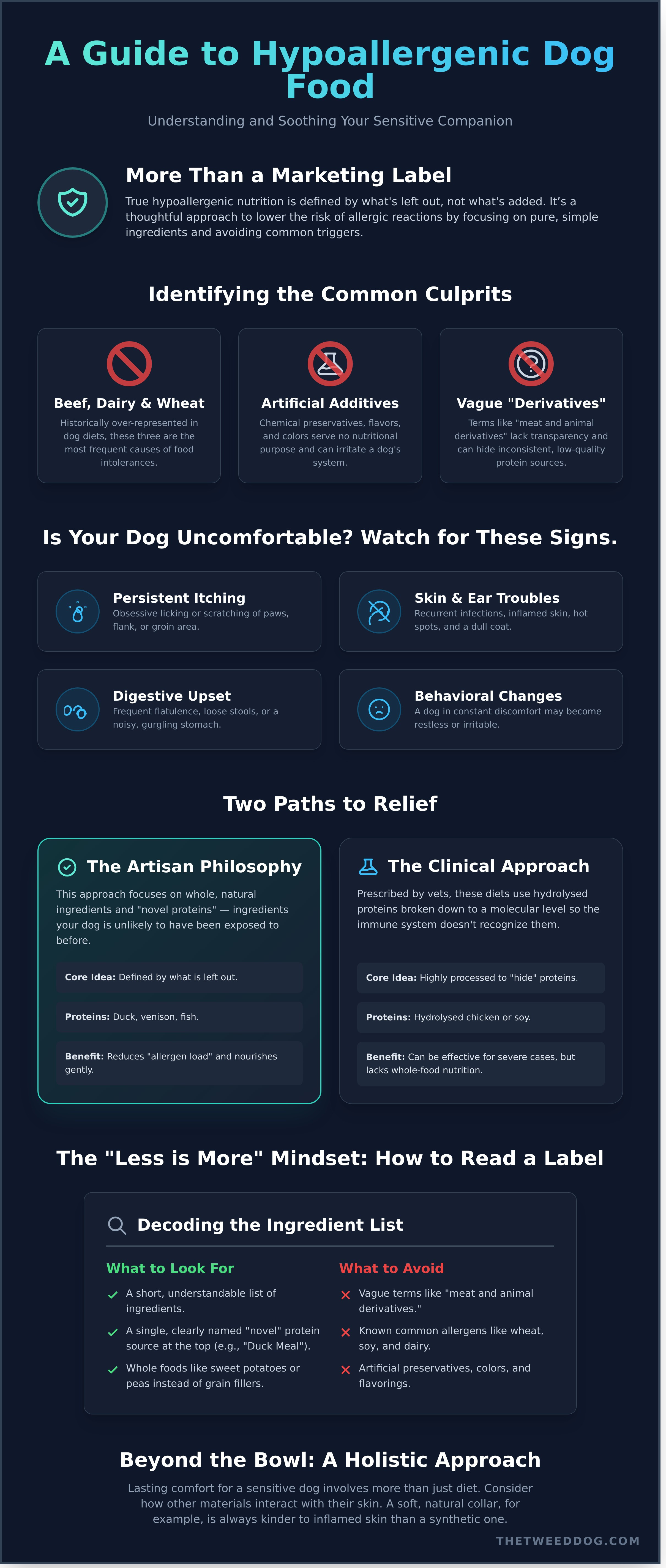
The true elegance of this approach lies in its simplicity: it is defined more by what is left out than by what is added. We can define hypoallergenic dog food as a diet formulated without common triggers like wheat, soy, or dairy. This principled approach focuses on reducing the "allergen load" on your dog's system. It often involves using "novel proteins"-such as duck, venison, or fish-which are ingredients your dog is unlikely to have been exposed to, and therefore less likely to react to. This is distinct from clinical, hydrolysed diets prescribed by veterinarians, where proteins are broken down to a molecular level. While there are many commercial Hypoallergenic dog food diets available, the most effective ones are always built upon a foundation of a simple, considered ingredient list.
Common Triggers in Standard Dog Food
When a dog with a sensitive disposition reacts to their food, the cause is often one of a few common ingredients found in mass-produced diets. A thoughtful examination of the label can reveal potential culprits that are best avoided. These frequently include:
- Beef, Dairy, and Wheat: Often referred to as the "big three," these ingredients are historically over-represented in canine diets and are the most frequent causes of food intolerances.
- Artificial Additives: Chemical preservatives, flavourings, and colourings serve no nutritional purpose and can be a source of irritation for a dog's digestive and immune systems.
- Vague "Derivatives": Terms like "animal derivatives" or "meat and animal derivatives" on an ingredient list can be a red flag. This lack of transparency means the protein source is inconsistent and could contain anything, making it impossible to manage a sensitive dog's diet effectively.
Deciphering the Symptoms of Food Sensitivity in Dogs
Our dogs communicate their discomfort not with words, but through subtle shifts in their physical well-being and behaviour. A true food sensitivity or allergy occurs when their immune system mistakenly identifies a protein in their food as a threat. Recognising the signs is the first, most heartfelt step we can take toward restoring their comfort and vitality. The outward signs can be surprisingly varied, often leading to a puzzle for even the most attentive owner.
While we often associate allergies with a dramatic reaction, the Symptoms of a food allergy in dogs are frequently chronic and understated. It is a quiet discomfort that builds over time. A considered observation of your companion can reveal clues that something in their diet is not quite right. Look for a pattern of these common indicators:
- Persistent Itching: Chronic scratching, or obsessive licking of the paws, flank, or groin area.
- Skin and Ear Troubles: Recurrent ear infections, red or inflamed skin, and hot spots are classic signs of an internal struggle.
- Digestive Upset: Frequent flatulence, loose stools, or a consistently noisy, gurgling stomach can point to an ingredient intolerance.
- Behavioural Changes: A dog in constant discomfort from itchy skin may become restless, irritable, or seem generally unhappy.
It is important to distinguish these year-round issues from seasonal environmental allergies, which may flare up with pollen in the spring and subside in the winter. A true food sensitivity will persist regardless of the season.
Dermatological Signs: The Skin and Coat Connection
A dog’s coat is a mirror to their internal health. A dull, brittle, or greasy coat can signify that essential nutrients are not being properly absorbed due to an immune response. This often leads to the relentless "itch-scratch cycle," where scratching damages the skin's natural barrier, inviting secondary infections and worsening the irritation. For dogs with such sensitivities, even their accessories matter; a soft, natural collar is always kinder to inflamed skin than a synthetic one.
Digestive Clues: What the Gut is Telling You
A healthy gut is the cornerstone of a robust immune system. When the digestive system is perpetually irritated by an offending ingredient, it cannot function optimally. Consistent stool quality is one of the most reliable metrics of your dog's digestive health. While an occasional upset is normal, persistent loose stools warrant attention. If symptoms are severe or sudden, a consultation with your vet is essential. For chronic, low-grade issues, they may suggest a considered dietary change, such as an elimination diet or a switch to a premium hypoallergenic dog food to soothe the system.
The Artisan Philosophy: Why Natural Ingredients Trump Clinical Processing
In the world of canine nutrition, a quiet debate exists between the clinical and the crafted. While many prescription allergy diets serve a purpose, they are often highly processed, breaking down ingredients to their barest components. We believe in a different approach, one rooted in thoughtful craftsmanship. This philosophy champions whole-food ingredients, slow-cooked in small batches to preserve their natural integrity. It is a return to simple, honest nutrition that supports a dog’s long-term vitality, rather than just managing a symptom.
This considered method ensures that the goodness of each ingredient remains intact. Natural antioxidants, found in ingredients like blueberries and sweet potatoes, are not lost to harsh processing. Instead, they are gently preserved, ready to support a sensitive dog's immune system. Choosing a well-crafted, natural diet is about nourishing your companion from the inside out, providing them with a foundation for a healthy, vibrant life.
For owners who take this philosophy to heart and wish to source the purest proteins for their dog's meals or homemade treats, it’s worth building a relationship with a trusted local supplier. For those in the Warwickshire area, you can visit The Artisan Butcher for high-quality, locally sourced meats.
This appreciation for natural, thoughtfully made products often extends to the choices we make for ourselves. For coffee lovers who appreciate an artisan approach, small-batch roasters like The Roast Haus Coffee Co. mirror this philosophy, and for those who value ingredients inspired by nature in every aspect of life, there are human equivalents in premium wellness products from Ripple & Wave or natural refreshments from Aroha Drinks.
For the truly dedicated owner, ensuring the purity of these natural ingredients can even mean growing them at home. This provides complete control over the process, from seed to bowl. For those in the UK interested in exploring this path, retailers like Discount Hydro offer a wide range of hydroponic and grow room supplies to get started.
The Power of Single-Source Proteins
For a dog with a sensitive constitution, simplicity is paramount. Identifying a trigger is far easier when the food contains a single, clearly named protein. As leading researchers at Tufts University's Cummings Veterinary Medical Center note, common proteins like beef and chicken are frequent culprits in food allergies. By choosing foods with novel proteins like duck, lamb, or white fish, you offer a safer, more transparent meal. This clarity extends beyond the food bowl, which is why The Tweed Dog’s natural treat range provides a wonderfully safe way to reward sensitive dogs without worry.
Grain-Free vs. Grain-Inclusive: A Balanced View
The conversation around grains can be confusing, but the distinction is simple: it is about quality, not just presence. A true hypoallergenic dog food avoids cheap "filler" grains like wheat and corn, which offer little nutritional value. However, beneficial "ancient" grains can be a wholesome part of a diet for many dogs. A grain-free approach is only truly necessary for dogs with a specific grain allergy. For most sensitive dogs, prioritising gentle, nutrient-rich carbohydrate alternatives like sweet potato or peas is the most considered path to digestive harmony.
A Considered Approach to Choosing the Right Hypoallergenic Diet
Transitioning your faithful companion to a new diet is a journey that requires patience and a thoughtful touch. Finding the right hypoallergenic dog food isn’t merely about swapping one bag for another; it’s a considered process of elimination and observation to ensure their lasting comfort and vitality. By following a few careful steps, you can make the change a smooth and positive experience.
- Step 1: Conduct a "Clear-Out" Phase. Before you begin, remove all non-essential treats, chews, and flavoured toys from your dog’s routine. This creates a clean slate, ensuring that any reactions can be attributed solely to their new food.
- Step 2: Read the Label with a "Less is More" Mindset. Simplicity is key. A shorter, more understandable ingredient list often signals a higher quality food, free from unnecessary fillers that could trigger sensitivities.
- Step 3: Introduce the New Diet Gradually. A sudden change can upset your dog's digestion. Mix the new food with their old over 7-10 days, slowly increasing the proportion of the new diet until the transition is complete.
- Step 4: Monitor the "Three Pillars". Pay close attention to your dog's Coat, Energy, and Digestion. A healthy, glossy coat, consistent energy levels, and firm stools are the clearest indicators that the new diet is a success.
- Step 5: Maintain Consistency. The benefits of a hypoallergenic diet can be quickly undone by well-intentioned but unsuitable extras. Resist the temptation to offer table scraps or other treats that could reintroduce allergens.
How to Read a Dog Food Label Like a Pro
Look for clarity and quality. Ingredients are listed by weight, so the first five are the most significant. Choose foods with "named" protein sources like deboned lamb or fresh chicken over vague terms like "meat and animal derivatives." Also, seek out natural preservatives such as tocopherols (a source of Vitamin E) or rosemary extract, which are far kinder than artificial alternatives.
The Importance of British Sourcing and Standards
Opting for UK-made food often means embracing stricter "heritage" quality controls that have been trusted for generations. It also supports a shorter, more transparent supply chain, reducing the carbon pawprint of your dog’s dinner. You can rest assured in the quality, as UK dog food standards are governed by FEDIAF (European Pet Food Industry Federation) to ensure every meal is nutritionally complete and balanced for your companion's health.
Just as you thoughtfully select their diet, consider the quality of their daily accessories. Explore our handcrafted British tweed collars and leads for timeless style and durability.
Beyond the Bowl: Holistic Comfort for the Sensitive Dog
A dog’s well-being is a tapestry woven from many threads. Providing the very best hypoallergenic dog food is a foundational step, addressing internal balance and nutrition. Yet, true comfort comes from a holistic approach, where this internal care is matched by a considered, thoughtful environment. For a dog with sensitivities, what they wear and lie on is just as important as what they eat.
Many common skin irritations are exacerbated by the very accessories designed for a dog's safety and comfort. Synthetic materials like nylon and polyester can trap heat and moisture against the skin, creating an environment where itching and discomfort can flourish. This is why a truly low-allergen lifestyle extends beyond the food bowl to every touchpoint in your dog’s day, from their bedding and grooming routine to the collar they wear on every cherished walk.
For some owners, this holistic view also includes exploring wellness products that support a dog’s overall comfort and calm. For those interested in natural, pet-focused supplements, the CBD Health Collection offers a range of quality options designed for pets.
Similarly, creating a calming atmosphere at home can help soothe a restless pet. Natural, gentle scents from producers like the Michigan-based Lavender Life Company can contribute to a peaceful environment, complementing dietary changes.
Caring for a sensitive companion can be stressful for the owner, too. For those who embrace natural wellness for themselves, resources like Mental Compass offer tinctures made from functional mushrooms and flower essences to support a sense of balance and calm.
Choosing Accessories for Sensitive Skin
When a dog's skin is already sensitive, choosing natural, breathable materials is paramount. Our pure wool tweed dog collars are handcrafted not just for their timeless, country-inspired style, but for their inherent kindness to skin. Wool is a remarkable natural fibre; it is breathable, temperature-regulating, and soft to the touch. Matching a healthy diet with a beautiful handcrafted tweed lead completes a picture of considered care, ensuring every country walk is a study in comfort and style.
The Joy of a Happy, Healthy Dog
The transformation in a dog who is finally free from persistent itching is a joy to behold. Their temperament softens, their playfulness returns, and they are truly comfortable in their own skin. This profound sense of peace strengthens the bond you share, turning daily walks into celebrated moments of connection. It is about more than just accessories; it's about honouring your companion with the very best, knowing every choice is ethically sourced and made with love.
We encourage you to embrace this thoughtful approach. By uniting a carefully chosen diet with handcrafted accessories, you are curating a life of complete well-being for your faithful friend. This is the heart of The Tweed Dog lifestyle: a commitment to craftsmanship, care, and the simple, profound joy of a happy, healthy dog.
Nourishing Your Sensitive Companion with Care
Navigating the world of food sensitivities requires patience and a thoughtful approach. As we have explored, true care for a sensitive dog lies not in a clinical label, but in understanding their unique needs and choosing simple, natural ingredients. Finding the right hypoallergenic dog food is a journey of discovery, one that prioritises pure, wholesome ingredients over complex formulas. It is about embracing a holistic view of their well-being, where what goes into their bowl is as important as the comfort they feel in their home.
This philosophy of considered care is at the heart of everything we do. Inspired by a deep love for dogs and British country life, our treats are handcrafted with the same integrity as our ethically sourced accessories. For a reward that honours their sensitive nature, explore our range of natural, single-protein treats for sensitive dogs.
By choosing with intention and care, you are not just managing a sensitivity; you are deepening the cherished bond you share with your faithful companion.
Frequently Asked Questions
Is grain-free dog food always hypoallergenic?
This is a common misconception. While grains can be an allergen for some dogs, many food allergies are reactions to common proteins like chicken or beef. A grain-free food is not truly hypoallergenic if it contains a protein your dog is sensitive to. A considered hypoallergenic diet focuses on using a single novel protein source, such as duck or venison, that your dog has not been exposed to before, or a hydrolysed protein.
How long does it take for hypoallergenic dog food to start working?
Patience and consistency are truly key. It can take between eight to twelve weeks for the previous allergens to clear your dog's system and for you to see a significant improvement in their skin and digestive health. While some positive changes may be noticeable sooner, the full benefits of a strict elimination diet are typically observed after this period. It is a journey that requires commitment for the best outcome.
Can my dog have treats while on a hypoallergenic diet?
Yes, but they must be selected with the utmost care. To ensure the diet trial is accurate, any treats must be made from the same single protein as their main food. For instance, if your dog is on a venison-based diet, only pure venison treats are suitable. It is essential to avoid all other treats, table scraps, and even flavoured dental chews, as these can reintroduce allergens and disrupt the process.
What is the best "novel protein" for a dog with severe allergies?
The "best" novel protein is entirely individual to your dog; it is simply one they have never encountered before. In the United Kingdom, excellent choices often include venison, rabbit, duck, or even insect protein, as these are less common in standard dog foods. A thoughtful review of your dog's dietary history with your vet will help identify a protein that is genuinely new to their system, offering the greatest chance of success.
Is hypoallergenic dog food suitable for puppies?
Yes, provided it is specifically formulated to support their growth. Puppies have unique nutritional requirements for healthy development. If a food allergy is suspected, your vet can guide you to a complete hypoallergenic dog food designed for puppies. These diets provide the correct balance of calcium, phosphorus, and energy to nurture a growing pup while carefully managing potential allergens. Always look for a formula labelled for "growth" or "all life stages."
How do I know if my dog has a food allergy or a seasonal allergy?
The timing of the symptoms offers a significant clue. Seasonal allergies, often to pollens, typically flare up during specific times of the year, such as spring or summer. In contrast, a food allergy will cause persistent symptoms year-round, including itching, paw licking, and sometimes digestive upset. The most definitive way to distinguish between the two is by undertaking a strict food elimination trial under your vet's guidance.
Can a hypoallergenic diet help with my dog’s ear infections?
Yes, it can often make a remarkable difference. Chronic or recurring ear infections are a very common sign of an underlying food allergy in dogs. The inflammation caused by the allergic reaction creates a warm, moist environment in the ear canal where yeast and bacteria can flourish. By removing the trigger allergen from their diet, you can often reduce the inflammation and, in turn, the frequency of these troublesome infections.
Why is my dog still itching after switching to hypoallergenic food?
There could be several reasons for this. It may simply be that not enough time has passed; remember, it can take up to 12 weeks for the skin to fully heal. It is also crucial to ensure no hidden allergens are being given through treats, dental chews, or well-intentioned table scraps. Lastly, the sensitivity may be to something in the environment, like dust mites or pollen, rather than food. A conversation with your vet is the best path forward.
0 comments